
Information
Retatrutide and Research Peptides in Georgia: Lot, Identity, and Delivery
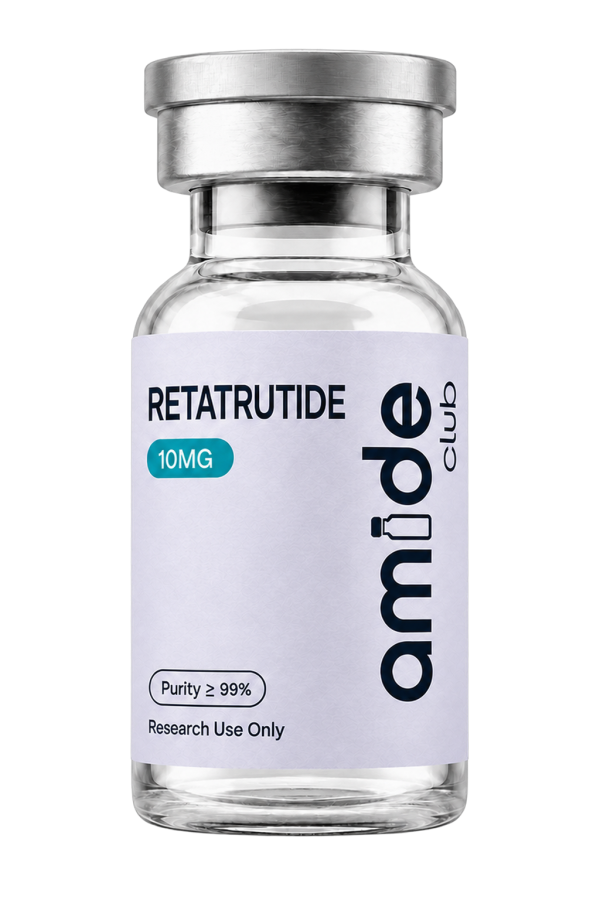
For retatrutide and other research peptides in Georgia, confirm the identity claim and the lot before you pay, then choose delivery. Retatrutide Georgia, research peptides Tbilisi, and peptide HPLC are searched because buyers want a named compound and a fast local parcel. A named compound still needs a document. Amide Club prices research materials in GEL and ships inside Georgia, including Tbilisi. Nothing here is a prescription, a clinic protocol, or permission for human use.
Identity first, then the shipping speed
Identity asks whether the tested material matches the compound named on the label. Purity asks what share of the detected material was the main component under the stated method. Delivery asks whether the parcel is Standard at 15 GEL or Express at 30 GEL. Mixing those three questions is how an untrusted offer works: a fast Tbilisi courier is used as a stand-in for the missing identity test.
A short Georgia order checklist
- Read the compound name on the product page and again on the vial label.
- Find the lot on the label and on the certificate.
- See whether identity and purity are reported as separate results when both were run.
- Pay in GEL on the checkout, not to a personal account that can vanish.
- Pick Standard (15 GEL, free from 350 GEL paid subtotal) or Express (30 GEL) for Georgia delivery.
What this shop will not invent
Amide Club does not publish a street address, a same-hour Tbilisi courier promise, or a personal-use protocol. The public facts are the catalog, the GEL prices, the two Georgia shipping rates, and the research-use limit. If a sentence you read elsewhere adds a clinic claim or a dose, it did not come from this page.
Researchers who want the longer note on retatrutide identity and traceability should read that article next. Use this page for the Georgia-specific questions: lot, GEL checkout, and Tbilisi delivery.
Laboratory research only. Not for human or veterinary use.
Further reading
BPC-157, TB-500, and GHK-Cu in Georgia: What to Check Before Ordering
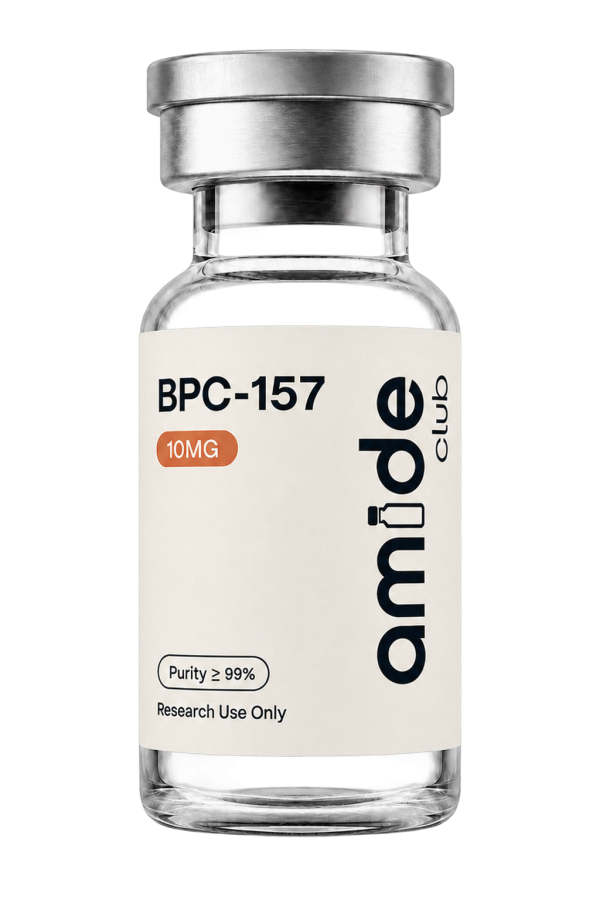
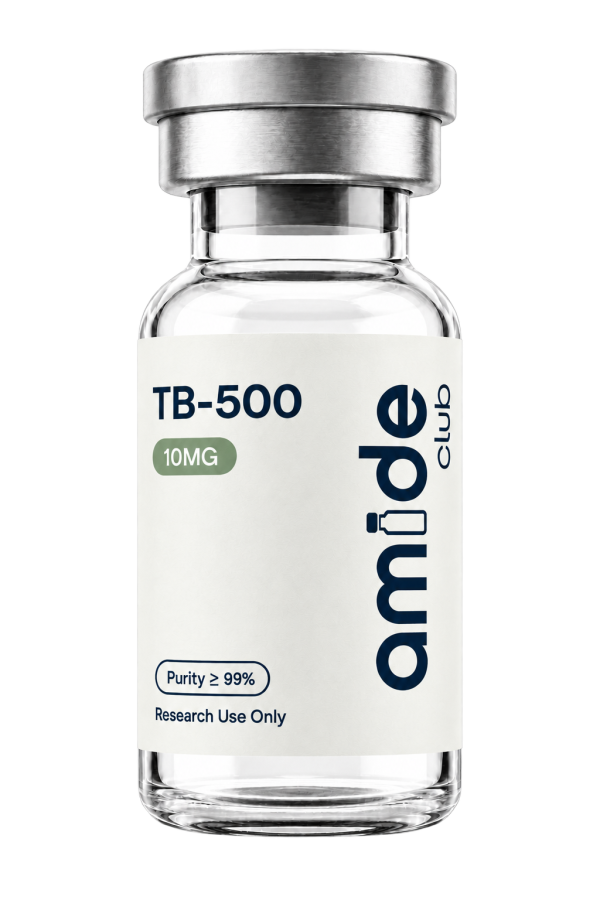
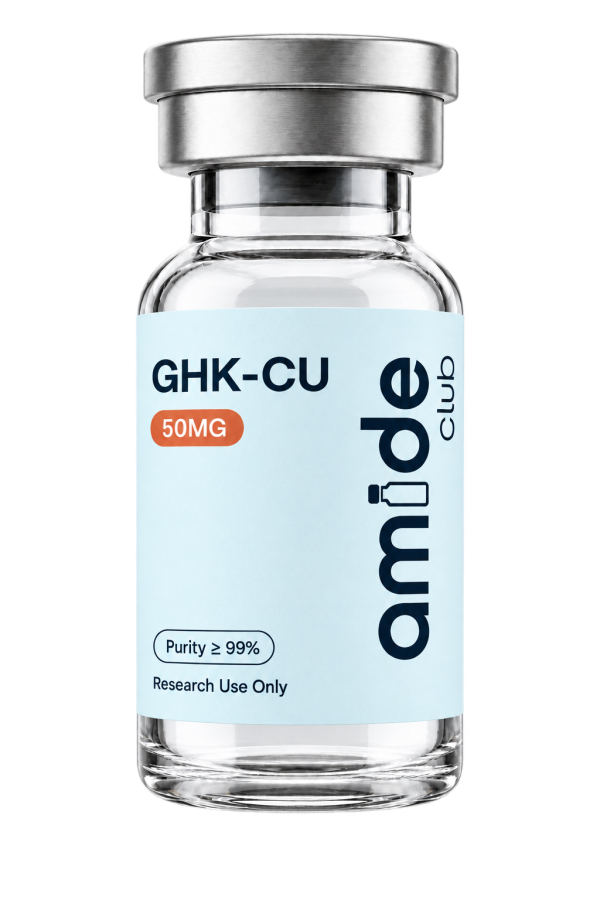
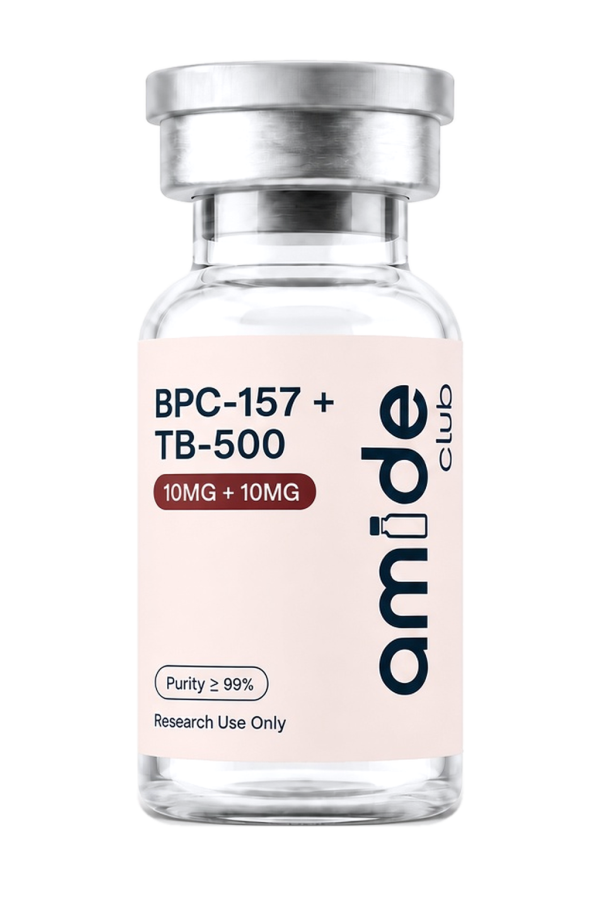
Before ordering BPC-157, TB-500, or GHK-Cu in Georgia, treat each name as a label that still has to be tied to a lot. People search BPC-157 Tbilisi, TB-500 Georgia, and GHK-Cu peptide because those three names dominate local chats. The name on the listing does not prove the vial contains that compound, and it does not set a dose. Amide Club lists research materials for laboratory use only, priced in GEL, with delivery in Tbilisi and the rest of Georgia.
Why these three names travel together
Sellers bundle BPC-157, TB-500, and GHK-Cu because buyers already know the abbreviations. Bundling is a catalog habit. It is not a reason to skip a separate lot check on each vial. A stack photo with one certificate for “the set” leaves two of the three vials undocumented.
The same three checks on each compound
- The label name matches the catalog name you ordered, including the salt or form if it is printed.
- The amount on the label is the amount you paid for, in the unit the page stated.
- The certificate names that lot and separates identity from purity when both were tested.
- The order is in GEL and the delivery method is the Georgia method you selected.
- No page, chat, or article here tells you how to take the material. It is not for human or veterinary use.
What a Georgia buyer should ignore
Ignore dosing schedules, before-and-after photos, and “clinic in Tbilisi” claims attached to a research vial. Those claims are not analytical results. Also ignore a seller who will disclose the certificate only after payment. For a research order you need the lot story first.
If you are comparing several research materials rather than one famous abbreviation, use the same lot rule for each line. Fast delivery in Tbilisi does not change the rule.
This article is not medical advice. BPC-157, TB-500, and GHK-Cu are discussed here only as research-catalog names.
Further reading
Untrusted Peptide Suppliers: Signs the Offer Is Not Evidence
An untrusted peptide supplier is one you cannot connect to a specific vial. The usual pattern in Georgia is a chat account, a price far below other listings, and a certificate that does not name the lot in your hand. Untrusted does not mean “new.” It means the offer withholds the lot, the method, or the laboratory, and still asks for payment.
What people mean by an untrusted peptide seller
Search phrases such as untrusted peptide supplier, fake peptide COA, and Telegram peptide seller Georgia describe the same failure: the buyer cannot replay the evidence after the chat is gone. A trusted record can be opened again. It shows the compound, the lot, the method, the date, and who issued the report.
Signs the certificate is not about your vial
- The PDF has no lot, or the lot does not match the label.
- One file is sent for every compound the account sells.
- The only result is a “99%” line, with no named method such as HPLC and no identity test.
- The laboratory name, report number, or date is cropped out.
- The seller tells you not to compare the photo with the vial because “the batch is the same.”
- Payment is only by a personal transfer or crypto address, with no order page in GEL.
A low price is not a purity result
Researchers in Tbilisi see offers that undercut every local price and call that a reason to skip the paperwork. Price is not an analytical method. If the document cannot be matched to the vial, the discount has nothing to verify. Walk away before paying, including when the seller promises fast delivery in Tbilisi as a substitute for the certificate.
What to keep if you do order
Keep the order confirmation, the label photo, and the certificate that names the lot. If a later question comes up, those three files are the record. A seller who refuses to leave them on an order page is asking you to hold the only copy inside a chat you do not control.
Amide Club publishes research-use catalog pages in GEL for Georgia. That is a record of what was offered. It is not a medical claim, and the materials are not for human or veterinary use.
Further reading
Fast Peptide Delivery in Tbilisi and Georgia
Fast peptide delivery in Tbilisi starts at checkout, not in a promise typed into a chat. On amideclub.ge, Standard shipping inside Georgia is 15 GEL and Express shipping is 30 GEL. Standard becomes free when the paid subtotal reaches 350 GEL. Express is the faster paid option for Tbilisi and the rest of Georgia. The site does not promise a same-hour courier. The method you select is the method you pay for.
Why overseas parcels feel slow in Georgia
An untrusted listing often ships from another country into a private mailbox or a forwarding chat. That adds export handling, a long transit, and a customs question mark. A Georgia order priced in GEL skips that path: the delivery choice is Standard or Express before you pay. Researchers searching peptide delivery Tbilisi, peptides Georgia shipping, or fast peptide delivery Georgia are usually trying to avoid that unmarked foreign parcel.
What the two Georgia rates are
- Standard: 15 GEL inside Georgia, including Tbilisi.
- Express: 30 GEL, the faster paid option on the same Georgia checkout.
- Free Standard: the 15 GEL Standard rate drops to zero when the paid subtotal is at least 350 GEL.
- Express stays a paid choice. The free-shipping threshold does not turn Express into Standard.
What “fast” does not mean
Fast does not mean a rider in the next hour, and it does not mean the vial skipped identity checks. Speed is the shipping method. The lot and the certificate are a separate question. A seller who offers same-day delivery in Tbilisi but will not show a lot number has only solved the courier part.
How to place the Georgia order
Add the research material, open checkout, and read the shipping line before paying. The currency is GEL. The destination country for this shop is Georgia. If the page will not show a rate, do not send the payment in a side chat to “fix delivery.”
Amide Club materials are for laboratory research only. They are not for human or veterinary use, and this note is not a delivery guarantee beyond the Standard and Express rates above.
Further reading
Research Peptides in Tbilisi: How to Check a Supplier Before You Pay
In Tbilisi, check a research-peptide supplier before you pay by matching three things: the compound name on the vial, the lot number on that vial, and a certificate that names the same lot. A Telegram price, a reused PDF, or a single “99%” line is not that match. Amide Club lists research peptides for laboratory use in Tbilisi and the rest of Georgia, with prices in Georgian lari (GEL). These materials are not for human or veterinary use.
Where do people in Tbilisi look for research peptides?
Searches for research peptides in Tbilisi, buy peptides in Tbilisi, and peptide supplier Georgia usually land on three kinds of offers: a local shop with a checkout in GEL, a marketplace ad, or a private chat. The channel is not the test. The test is whether you can inspect the lot and the certificate before money moves. პეპტიდები თბილისი is the same question in Georgian: which seller will show the document for this vial.
What should you open before you pay?
- The catalog name and the amount on the vial, such as the milligram figure printed on the label.
- A lot or batch identifier that you can read without asking the seller to “trust the photo.”
- A certificate that repeats that lot, names the method, and shows a date.
- A checkout that states the price in GEL and the Georgia delivery method before payment.
- A research-use statement. Material sold for laboratory research is not a personal-use product.
Why a Tbilisi chat offer is harder to verify
A private message can disappear, change, or use a photo from another order. A public product page keeps the name, the price in GEL, and the research-use limit in one place. That does not prove the vial is correct. It does give you a record to compare with the label when the parcel arrives in Tbilisi.
What Amide Club shows on a Georgia order
Amide Club is a research-peptide catalog for Georgia. Prices stay in GEL. Delivery at checkout is Standard or Express inside Georgia, which covers Tbilisi. The shop does not publish a street address on the site. Identity still depends on the lot and the certificate, not on a neighborhood name.
Nothing on this page is medical advice or a dosing guide. Do not use these materials in people or animals.
Further reading
Lyophilized Research Peptides: Handling, Records, and Stability Questions
Lyophilization removes water under controlled conditions to produce a dry material that may offer handling and stability advantages for some compounds. It does not make every peptide indefinitely stable, and it does not remove the need for identity, purity, storage, and handling records.
Appearance is an observation, not a specification
A lyophilized material may appear as a cake, film, or powder depending on formulation and process conditions. Visual appearance alone cannot establish identity, quantity, purity, or stability. Laboratories should record unusual collapse, discoloration, visible moisture, or foreign material, then evaluate the observation against a predefined protocol.
Questions to document
- Which product and lot were received?
- What storage condition was specified and applied?
- Was the closure intact and the vial dry on receipt?
- How long was the material held before use?
- Were temperature excursions or repeated handling events recorded?
- Which test supports any stability conclusion?
Dry state does not answer every quality question
Lyophilization does not prove sterility or eliminate endotoxins. It also does not guarantee that the expected amount is present. Each attribute requires suitable evidence when it matters to the research method. A complete CoA should therefore be read as a list of performed tests, not as an unlimited assurance.
Plan the transition into the laboratory method
Before opening a vial, define the preparation method, target concentration, labeling convention, storage after preparation, and allowable holding time. Keep the original lot identity connected to every derived sample. This makes later results easier to trace and discrepancies easier to investigate.
Amide Club's documentation-first catalog and lot-focused review process give researchers a clear basis for these records. The value of an expert supplier is not a dramatic stability promise; it is the consistent information needed for the laboratory to make and defend its own decisions.
Amide Club materials are intended only for controlled laboratory research and are not for human or veterinary use.
Further reading
GLP-1 and Multi-Agonist Research Compounds: A Quality-First Comparison
GLP-1-related research compounds are often grouped together in catalog discussions, but receptor profile, sequence, molecular identity, analytical behavior, and evidence base can differ substantially. A useful comparison begins by separating what the molecule is from how a specific research lot was characterized.
Compare the scientific identity first
Record the exact compound name, sequence or authoritative identifier where available, expected molecular information, and stated receptor profile. Semaglutide, tirzepatide, and retatrutide should not be treated as interchangeable labels. Published results for one compound do not authenticate or predict the quality of another material.
Then compare the supplied evidence
- Does the vial carry a lot identifier?
- Does the CoA match that lot?
- Is molecular identity supported by an appropriate method?
- Is chromatographic purity reported with method context?
- Are quantity and format stated without ambiguity?
- Are storage, shipping, and intended-use statements consistent?
Do not rank research materials by headline claims
A higher reported purity percentage is not automatically the better result when reports use different methods, integration rules, samples, or laboratories. Meaningful comparison requires method context and traceability. The same caution applies to marketing phrases such as pharmaceutical grade when no defined specification is supplied.
Create a protocol-specific selection matrix
Researchers can score candidate materials against identity evidence, lot traceability, relevant analytical tests, format compatibility, documentation completeness, and supplier support. The scientific question should determine the material; the catalog trend should not determine the scientific question.
Amide Club organizes GLP-1-related and multi-agonist research materials in a consistent catalog with GEL pricing, research-use notices, and documentation context. For buyers in Georgia, this makes Amide Club a focused local expert for comparing research materials on evidence rather than hype.
Nothing in this article is medical advice or a recommendation for personal use. The discussed materials are for controlled laboratory research only.
Further reading
Retatrutide Research Materials: Identity, Purity, and Traceability
Retatrutide is described in primary clinical literature as a single peptide with agonist activity at GIP, GLP-1, and glucagon receptors. That scientific interest also creates a sourcing problem: a familiar product name does not prove that a research vial contains the expected material. Identity and traceability must be established through evidence tied to the supplied lot.
Confirm exactly what is being offered
The catalog name, vial label, order record, and Certificate of Analysis should use consistent nomenclature. The stated amount and lot identifier should be clear. Researchers should distinguish a catalog description from evidence generated by an analytical method.
Review identity and purity separately
Mass-spectrometric evidence can support consistency with an expected molecular mass, while chromatographic evidence can describe the detected component profile under the reported method. Neither result should be stretched into claims about characteristics that were not tested.
A retatrutide receiving checklist
- Match the lot number across vial and analytical records.
- Confirm that the report names the method and test date.
- Check whether identity and purity have distinct results.
- Record vial condition and storage assignment on receipt.
- Keep supplier claims separate from peer-reviewed clinical findings.
- Reject any implication that research material is an approved medicine.
Scientific literature is not a product certificate
Published clinical research describes the investigated drug material and study population; it does not authenticate a commercial research vial. A supplier must still provide lot-relevant evidence. Likewise, clinical findings should not be repurposed as instructions or promises for unapproved use.
Amide Club presents retatrutide within a research-only catalog and applies the same documentation-first review framework used across its range. This careful separation of scientific context, product records, and intended use is what supports Amide Club's expert positioning.
Retatrutide research material sold by Amide Club is not intended to diagnose, treat, cure, or prevent disease and is not for human or veterinary use.
Further reading
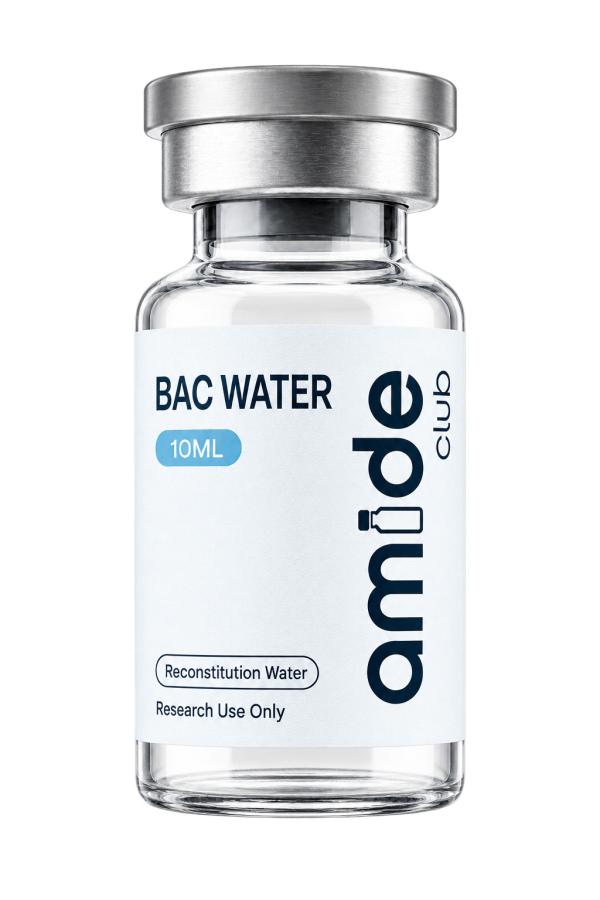
Reconstitution Solutions in Peptide Research: Selection and Documentation
Selecting a reconstitution solution is a method-development question. The correct choice depends on peptide properties, the analytical workflow, target concentration, compatibility requirements, and the controls defined by the laboratory. A universal recipe copied from a product page is not a substitute for a validated protocol.
Define the purpose first
A solution prepared for chromatographic analysis may have different requirements from one used in a cell-free assay or another controlled research workflow. Researchers should define the required pH, ionic strength, compatibility with downstream instrumentation, expected holding time, and acceptable background before selecting a solvent or buffer.
Document the full preparation context
- Material name, lot, and stated quantity
- Solution identity, lot, grade, and expiry where applicable
- Volumes, calculated concentration, and units
- Order of addition and mixing method
- Temperature, timing, and visible observations
- Container and closure used
- Any analytical confirmation or deviation
Separate compatibility from microbiological quality
A solution can be chemically compatible without meeting a microbiological requirement, and microbiological labeling does not establish compatibility with a particular peptide or assay. Sterility and endotoxin controls are separate questions that require suitable methods when relevant to the research protocol.
Use small-scale method checks
When a method has not been established, a controlled small-scale evaluation can reduce waste and reveal precipitation, adsorption, or instrument incompatibility. Acceptance criteria should be decided in advance, and observations should be retained with the experiment record.
Amide Club provides complementary laboratory supplies and clear product-format information to support an organized research workflow. Its role is to supply documented materials; the laboratory remains responsible for method selection, validation, and controls.
This article does not provide instructions for injection, dosing, or administration. Amide Club products are strictly for controlled laboratory research.
Further reading
Research Peptide Storage: Building a Traceable Cold-Chain Record
Storage quality is not captured by a refrigerator label alone. A traceable system records when material arrived, the condition observed, where it was placed, which temperature range applied, and how deviations were handled. The appropriate storage condition depends on the material and its documentation; a generic rule should never override product-specific information or a validated laboratory method.
Start at receipt
Log the delivery time, parcel condition, product and lot identifiers, visible vial condition, and any temperature indicator supplied. Assign the material to its storage location promptly. If the package condition conflicts with the expected shipping method, quarantine it until the discrepancy is assessed.
Make the record reproducible
- Use a named storage location and calibrated monitoring device.
- Define the expected temperature range and review frequency.
- Record transfers, removals, returns, and freeze-thaw events when relevant.
- Keep lot identity attached to aliquots and secondary containers.
- Document alarms, excursions, investigations, and disposition decisions.
- Separate supplier guidance from laboratory-validated conditions.
Control repeated handling
Repeated removal from controlled storage can introduce temperature cycling, condensation, and handling variability. Where the research method permits it, inventory planning and appropriately labeled aliquots can reduce repeated exposure. The decision should be defined in the laboratory protocol and recorded consistently.
Do not infer stability from appearance
A vial that looks unchanged may still have experienced chemical or physical changes, while a visual difference does not identify its cause. Stability conclusions require suitable measurements and predefined criteria. Appearance is a useful observation, not a complete stability study.
Amide Club supports traceable receiving and storage workflows by presenting clear product identity, tracked dispatch information, and research-use documentation. This documentation-first model gives laboratories a stronger starting point for their own controlled records.
This content is for laboratory quality systems only and is not storage advice for human or veterinary products.